

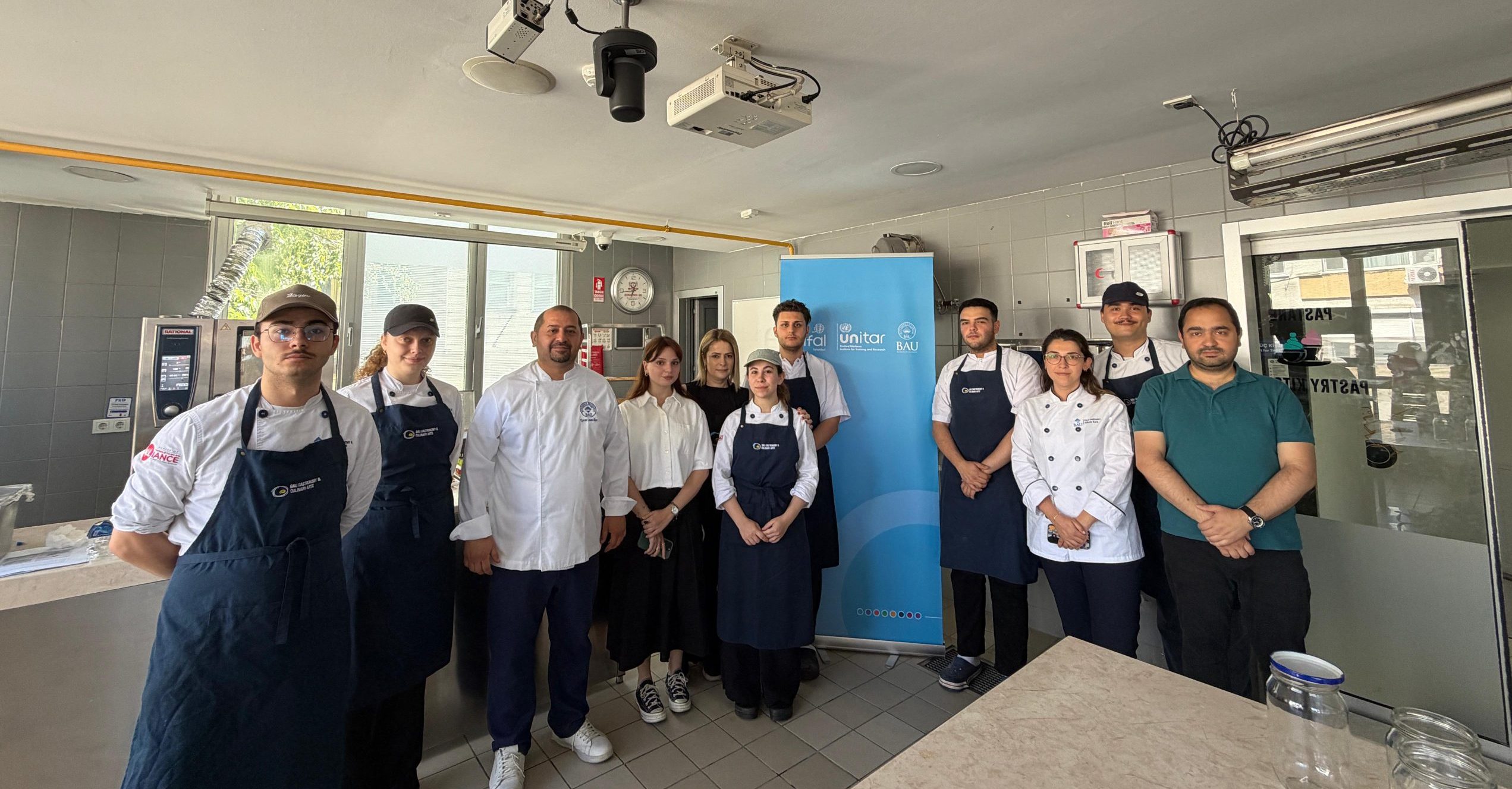
3 June 2026, Istanbul, Türkiye – Held at Bahçeşehir University as part of Istanbul Zero Waste Week, the workshop transformed a wide range of ingredients commonly discarded in kitchens—from fruit and vegetable peels to seeds, stale bread, and coffee grounds—into creative recipes and sustainable culinary products.
The “Zero-Waste Recipes Workshop” was held on 3 June 2026 at the kitchen of the Bahçeşehir University Department of Gastronomy and Culinary Arts as part of Istanbul Zero Waste Week, an initiative implemented under the auspices of the Zero Waste Foundation and the Governorship of Istanbul.
Organized in collaboration with CIFAL Istanbul, UNITAR and Bahçeşehir University, with the contributions of the BAU Department of Gastronomy and Culinary Arts, the workshop brought together practical methods for preventing food waste with the creative potential of gastronomy.
Food Scraps Became Essential Ingredients in New Recipes
Throughout the workshop, food components that are often discarded during preparation were repurposed through a range of creative culinary techniques. Onion and garlic skins were dried, ground into powder, and incorporated into the spice mixture prepared for Islama Köfte, enhancing the dish’s aroma and flavour. Stock made from meat and bones was used to flavour and toast stale bread, while another portion of the bread was transformed into crostini.
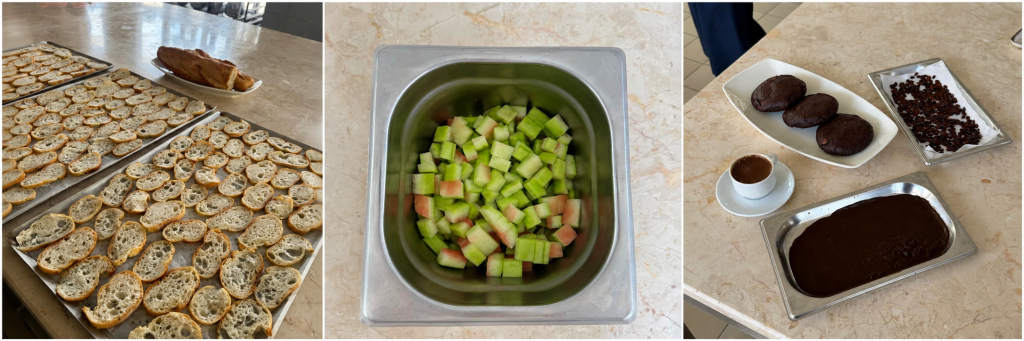
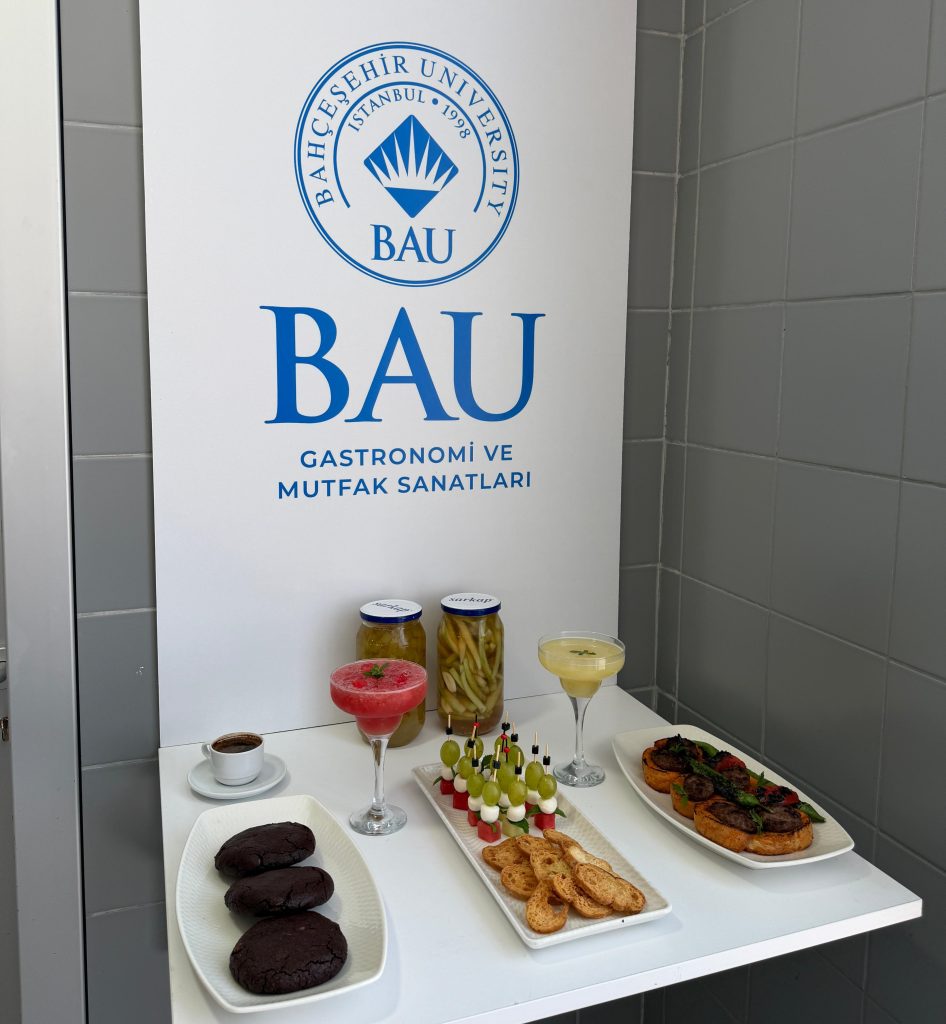
Melon seeds were used to prepare sübye, a traditional beverage rooted in Ottoman culinary culture, bringing together culinary heritage and contemporary sustainability practices. Watermelon and melon were also utilized comprehensively: their edible parts were combined with cheese to create canapés, while watermelon was used to prepare a refreshing frozen beverage.
The white part of the watermelon rind was processed into pickles and jam, demonstrating how parts commonly regarded as waste can be preserved and transformed into new products. Watermelon seeds were dried, ground into flour, and incorporated into coffee-flavoured cookies. Similarly, the grounds remaining after the preparation of Turkish coffee were processed for use as an alternative ingredient in baked goods.
Together, these practices demonstrated how peels, seeds, stale bread, bones, and other food remnants can be returned to the culinary production cycle rather than discarded. By combining traditional knowledge with innovative techniques, the workshop offered practical examples of how food waste can be reduced while creating new flavours, textures, and products.
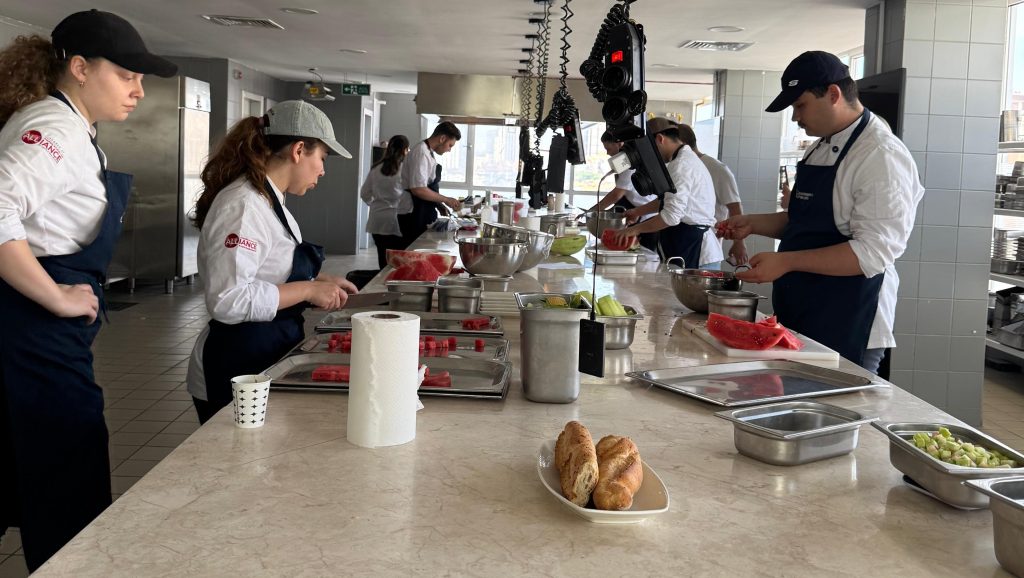
The Zero-Waste Approach Extended Beyond the Recipes
The workshop was not limited to developing new recipes. Every stage of food preparation was addressed through a comprehensive perspective focused on the efficient use of resources and the minimization of potential waste.
Watermelon and melon peels remaining from the preparation process were separated for composting rather than being sent directly to waste disposal. The organic materials were allocated for use in the cultivation of fruit, vegetables, and aromatic plants in the garden of the BAU Department of Gastronomy and Culinary Arts.
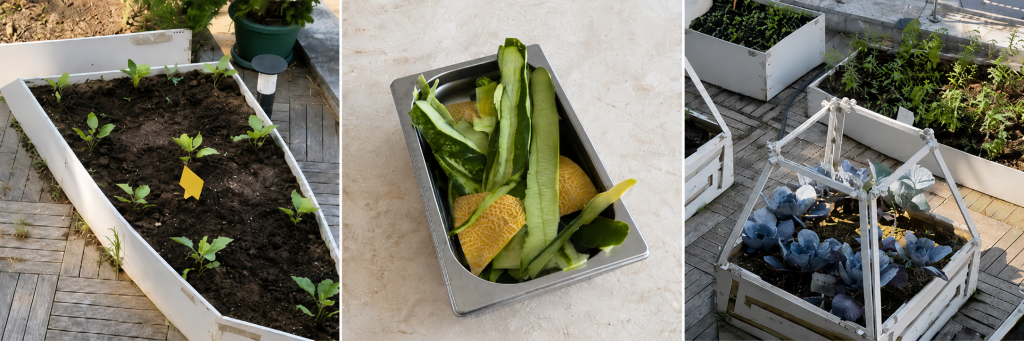
The department’s garden enabled the sustainability approach introduced during the workshop to extend beyond the boundaries of the kitchen. By converting organic kitchen scraps into compost and returning them to the soil, the workshop contributed to the completion of the cycle between food production and consumption.
In this respect, the garden stands out not only as an agricultural production area but also as a practical sustainability environment where students and participants can observe the journey of food from soil to table and from the table back to the soil. Through this model, the department’s garden functions as a living learning environment that brings together culinary education, ecological awareness, and sustainable production. The integration of kitchen practices with composting and cultivation also highlights the importance of designing food systems in which resources remain in circulation for as long as possible.
A Practical Culinary Model for Preventing Food Waste
The practices carried out during the workshop emphasized that preventing food waste is achievable not only in professional kitchens but also through methods that can be incorporated into daily household routines.
Participants experienced how careful planning, storage, transformation, and reuse techniques can increase the yield obtained from food products, enable familiar recipes to be reinterpreted with alternative ingredients, and significantly reduce the amount of organic waste generated in kitchens. Implemented with the academic and practical contributions of the BAU Department of Gastronomy and Culinary Arts, the workshop presented an exemplary gastronomic model in which no food component was regarded as functionless waste. Instead, each ingredient was kept within the production cycle through reuse, transformation, preservation, or composting.
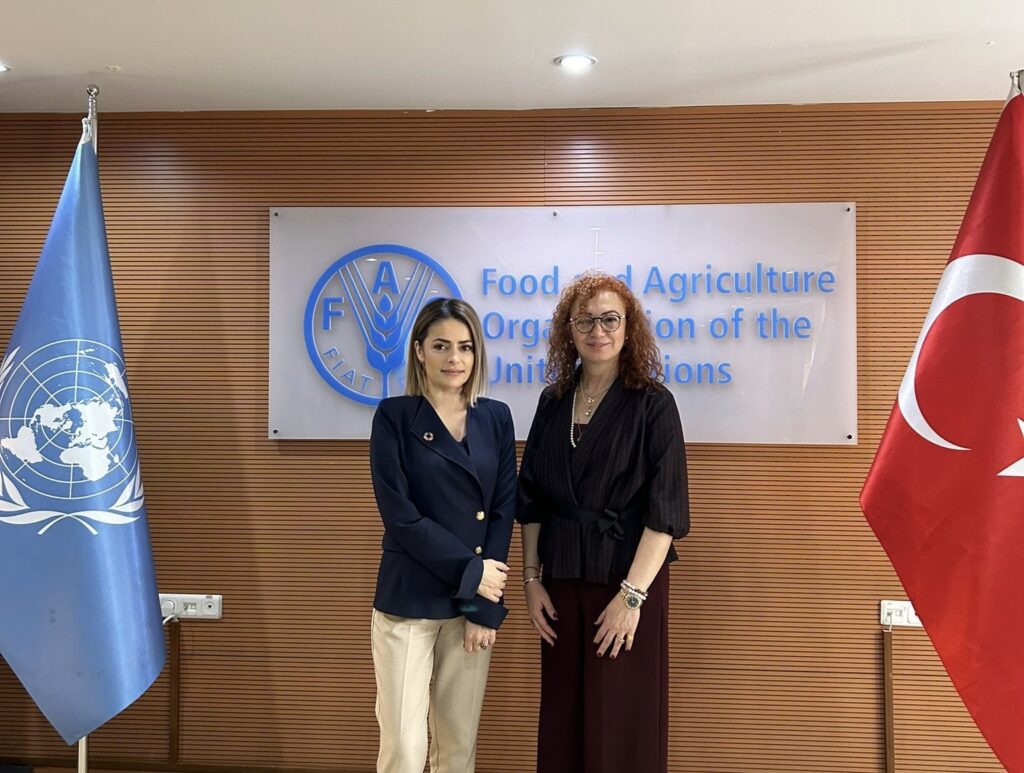
On January 8, 2025, Prof. Çisil Sohodol, Director of CIFAL Istanbul, visited the FAO Türkiye Headquarters in Ankara, Türkiye to engage in productive discussions aimed at identifying potential areas for future collaboration. The meeting served as a platform to explore pressing topics in agriculture and food security, focusing on innovative approaches and strategies to address current global challenges. As the world faces mounting pressures on food systems and sustainable development, both parties reaffirmed their commitment to working together to address these challenges through impactful projects and initiatives.
Over the years, CIFAL Istanbul and FAO Türkiye have developed a strong partnership focused on advancing the United Nations’ Sustainable Development Goals (SDGs). During the discussions, Prof. Sohodol and FAO representatives explored opportunities to further deepen their collaboration in line with the SDGs, particularly those related to food security, sustainable agriculture, and gender equality. Building on their successful history of working together, the conversation centered on expanding efforts to promote regenerative agriculture practices, which are crucial for long-term sustainability, and supporting initiatives that empower agricultural communities, especially by amplifying women’s roles within this sector.
A particularly significant aspect of the discussions was the shared commitment to fostering inclusive practices in agriculture. Both parties recognized the critical role of gender dynamics in shaping the agricultural landscape and reaffirmed their dedication to supporting women’s agricultural cooperatives. Addressing these challenges aims to empower women in rural communities, enhance their economic opportunities, and promote a more inclusive and equitable agricultural sector. The meeting also emphasized the need to protect biodiversity, to promote the concept of Sustainability to all generations starting from primary school level, and that water, soil, environment and food are not only a goal to be supported but also a necessity for sustaining vital activities. The meeting was an important step in creating a future where agricultural practices are sustainable, inclusive and in line with global development goals.
18 October 2024, Istanbul, Turkiye – CIFAL Istanbul, FAO, BAU SÜGAM, Bahcesehir University organized a Poster Competition to highlight this years concept “The Right to Food.”
The World Food Day Poster Competition has raised awareness about the right to food, promote understanding of sustainable agriculture and food systems, and created a social impact. This competition encouraged young people to advocate for everyone’s right to adequate, nutritious, diverse, and culturally appropriate food.
The student contestants focused on critical issues such as food security, justice, and sustainability through their posters. With the slogan “Leave No One Behind,” they envisioned a world where everyone has equal and safe access to food. Highlighting the importance of social, economic, and environmental justice while reaffirming that the right to food is a fundamental human right. It was emphasized that consumer organizations strive to make the food system more transparent and fair by raising public awareness about healthy nutrition.
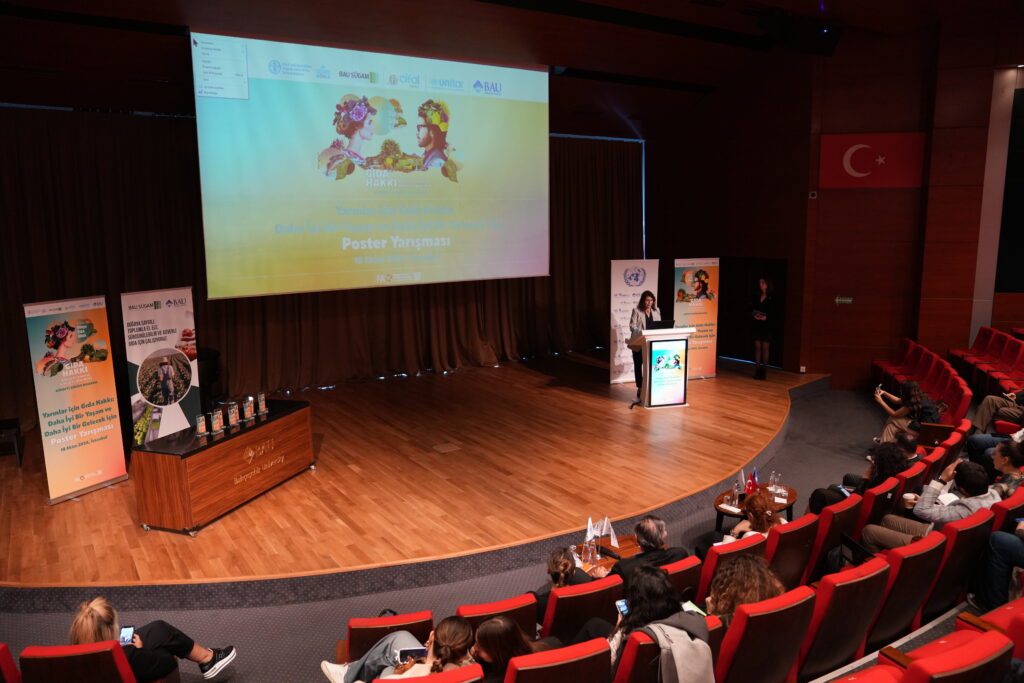
The opening speech was delivered by Prof. Arif Ergin, Dean of the Faculty of Engineering and Natural Sciences. In his speech, he expressed his belief that these posters would enhance young people’s awareness of food sustainability, taking the first step toward a more sustainable future.
Assoc. Prof. Zeynep Tacer Caba, Director of SÜGAM, spoke about the ‘right to food,’ emphasizing that it is not only essential for survival but also for maintaining a healthy life through regular and sustainable access to food.
Assoc. Prof. Yasemin Ülker, Deputy Director of CIFAL Istanbul, has showcased data to explain that the existing food gap is indeed a gap that can be filled. She noted that the reason for the gap not being filled is due to factors such as lack of access, unawareness, and the inability to prevent food waste.
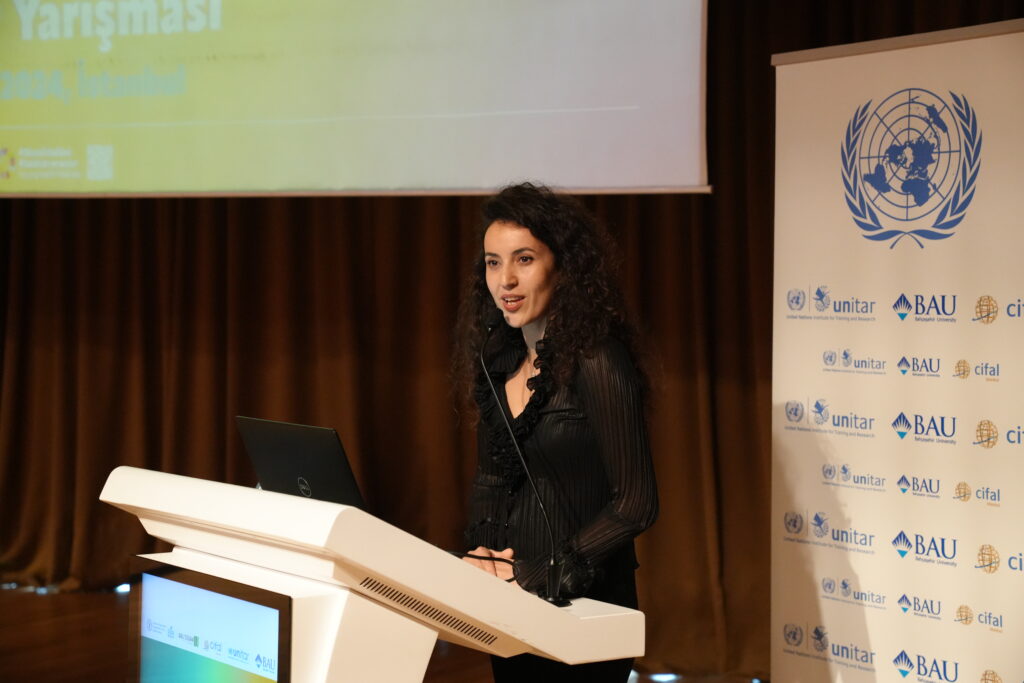
Dr. Ayşegül Selışık, Deputy Representative of FAO Turkey, called on young people to advocate for the right to food for a better life and a better future. She emphasized that we must not only ensure food availability but also make sure it is diverse and nutritious. To achieve this, we need to transform agri-food systems to be more efficient, inclusive, resilient, and sustainable. This transformation must be comprehensive and involve multiple stakeholders. “Since conflicts have become a major cause of hunger and malnutrition, we need to say louder than ever that Peace Is a Prerequisite for Food Security.”
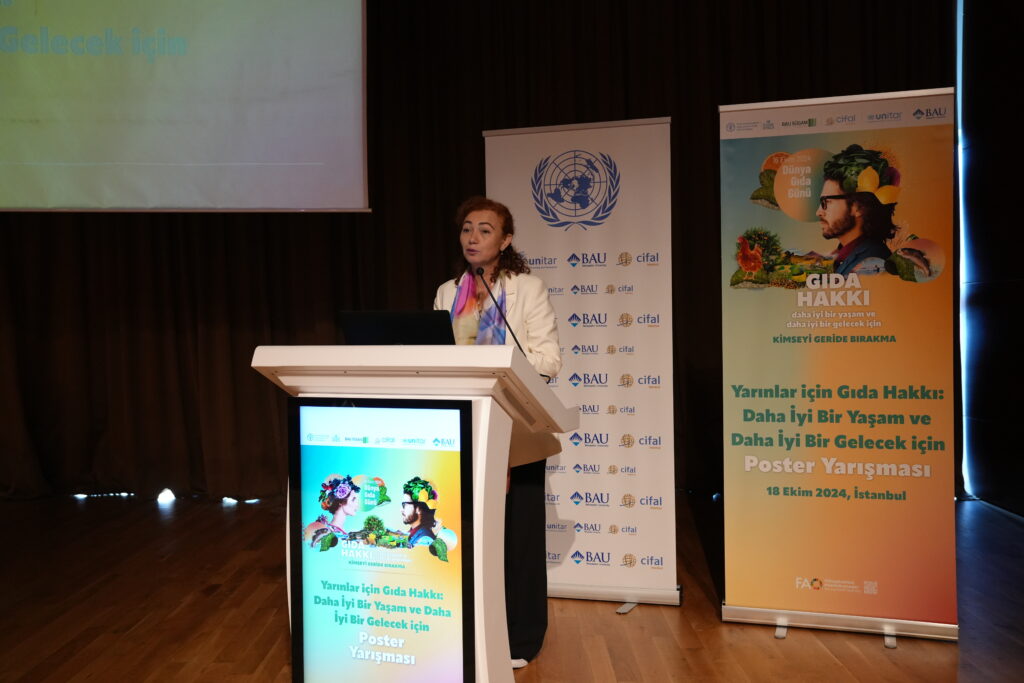
The World Food Day Poster Competition has raised awareness about the right to food, promote understanding of sustainable agriculture and food systems, and create social impact. This competition
encouraged young people to advocate for everyone’s right to adequate, nutritious, diverse, and culturally appropriate food. They envisioned a world where everyone has equal and safe access to food. This highlighted the importance of social, economic, and environmental justice while reaffirming that the right to food is a fundamental human right.
At the end of the competition, jury members presented plaques and awards to the winning students.
Award-winning Posters:
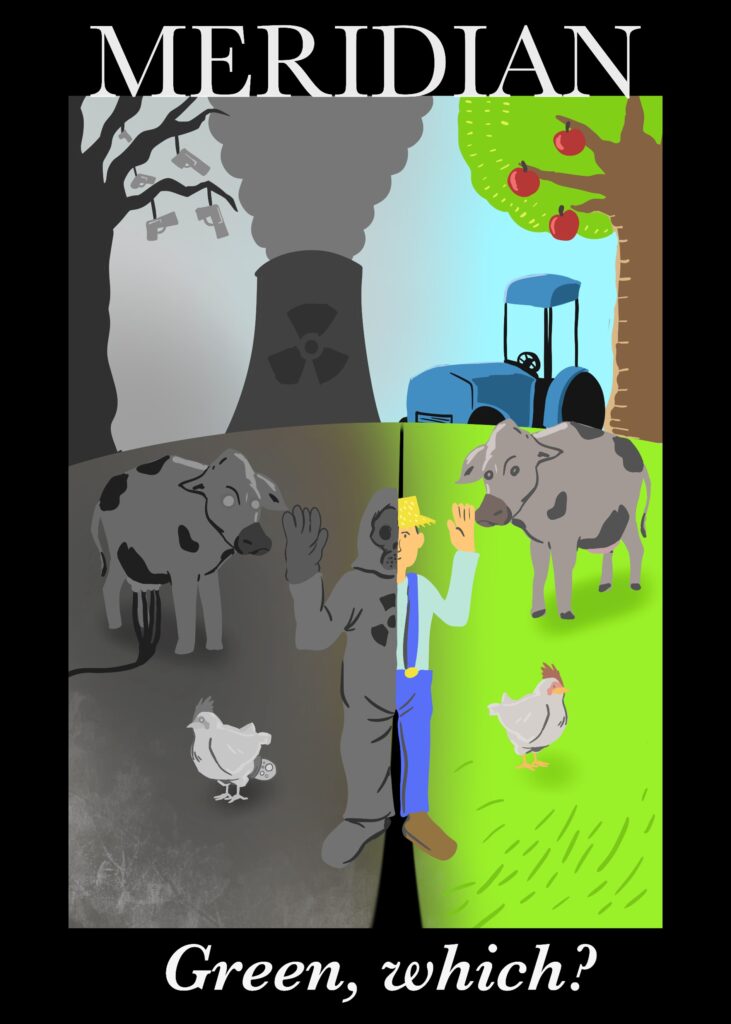
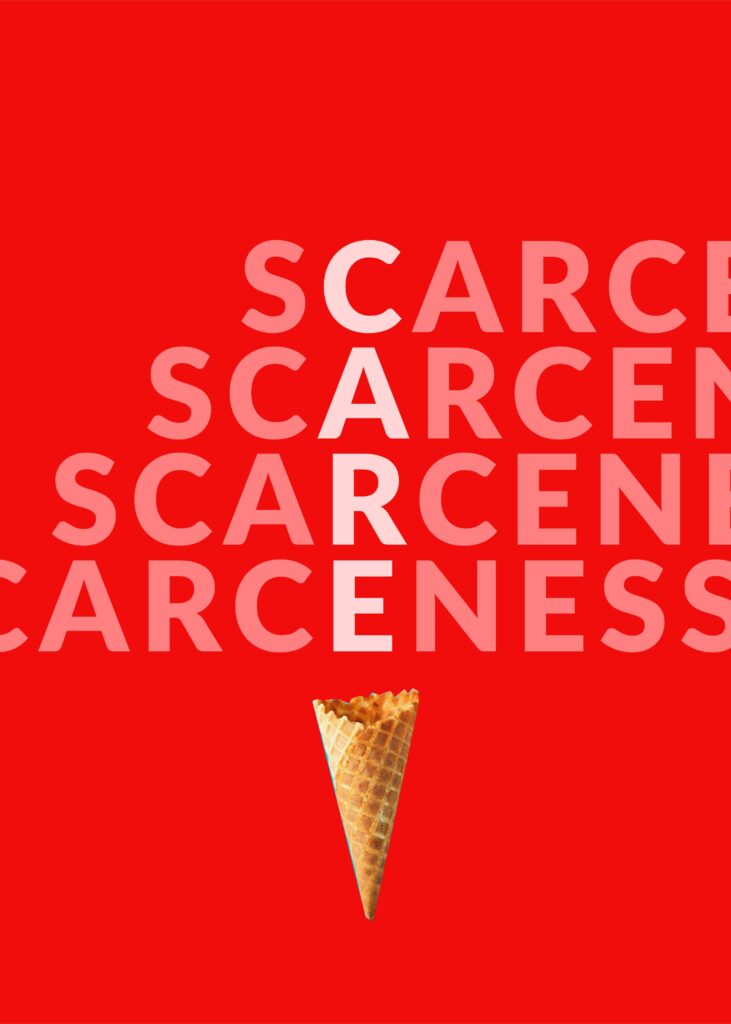
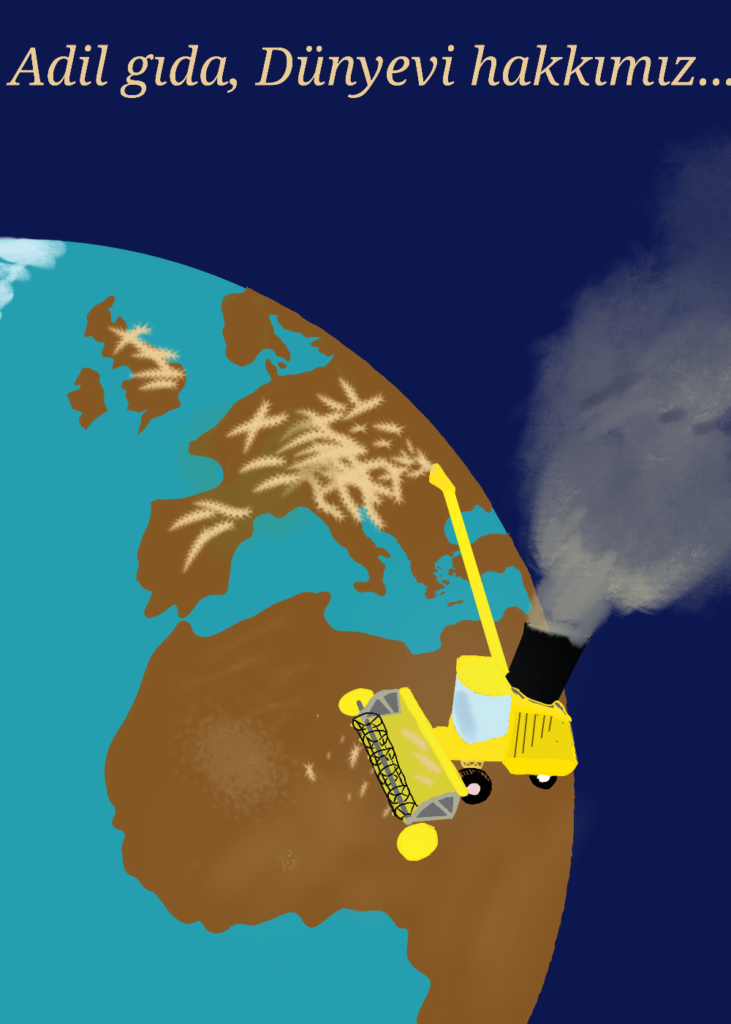

Date: October 6-7, 2022
Location: Hybrid
World Food Day, celebrated in more than 150 countries and in over 50 languages, marks the anniversary of the founding of the Food and Agriculture Organization (FAO). As the FAO’s most significant annual event and a prominent day on the UN calendar, it calls upon everyone—from governments and private sectors to academia, civil society, and young people—to become food heroes and contribute to building a sustainable future.
We are pleased to report the successful conclusion of the BAU FAO World Food Day Leave No One Behind Sustainable Farms Project Competition Training. This initiative, organized in partnership with FAO, CIFAL Istanbul, BAU SÜGAM, and the BAU Dean of Students Office, inspired students from diverse educational backgrounds to adopt sustainable agriculture practices actively.
Participants engaged in a comprehensive online training program on October 6-7, 2022, focusing on the following sub-topics to develop sustainable farm projects:
- Engineering applications
- Policy making
- Increasing output and productivity
- New products and innovation
- Female empowerment
- Biopackaging
- IT technologies
The event’s goal was for students to integrate sustainable agriculture philosophies into their lives and society, fostering new ideas that will benefit our world and future. The course featured web-based training sessions and in-person project presentations, providing a robust learning experience.
We are thrilled with the innovative and impactful projects our students developed, contributing to a more sustainable and inclusive world. Their dedication and creativity in addressing critical agricultural issues have set a remarkable precedent for future initiatives.